

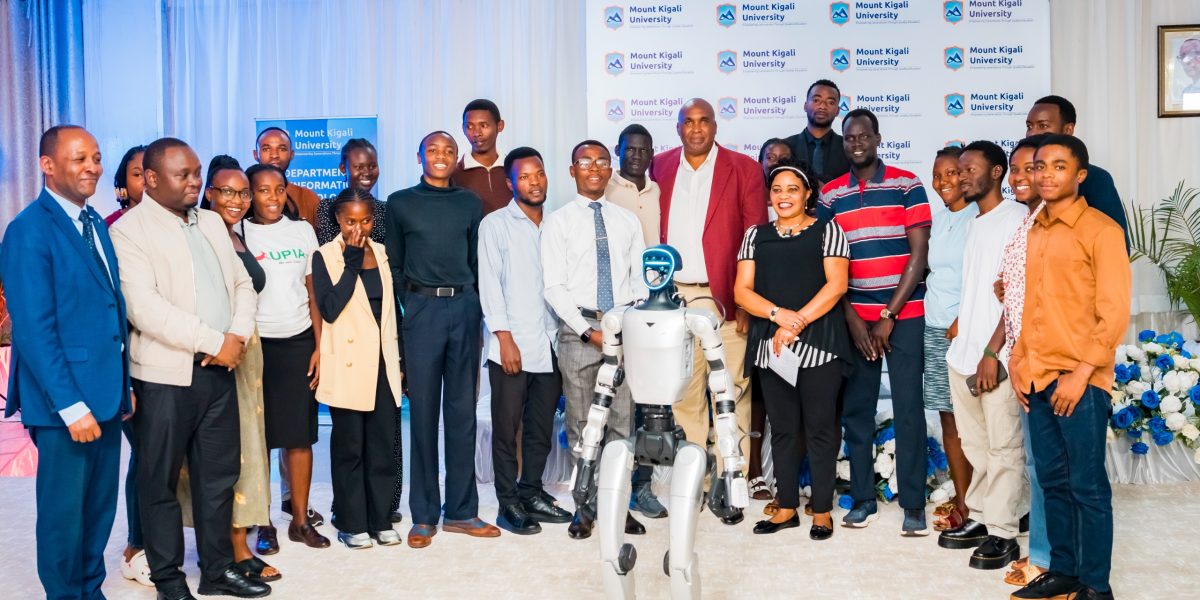
Mount Kigali University has unveilled the Unitree G1 EDU U6 Robotic Humanoid, signaling a major strategic shift toward becoming a regional hub for Artificial Intelligence and robotics research in East Africa. The acquisition of the G1 EDU series, developed by the prominent firm Unitree Robotics, marks one of the first instances of this specific advanced humanoid platform being integrated into a university curriculum on the African continent. The move is designed to bridge the widening gap between theoretical computer science and the practical demands of the global fourth industrial revolution.
The Unitree G1 EDU U6 is defined by its remarkable dexterity, which separates it from traditional stationary industrial robots. At the core of its physical capabilities are the “Inspire 5” robotic hands, featuring five fully articulated fingers with 12 joints and six degrees of freedom. This engineering allows the robot to perform delicate tasks previously reserved for human labor, such as intricate object manipulation, tactile interaction, and complex gesture-based communication.
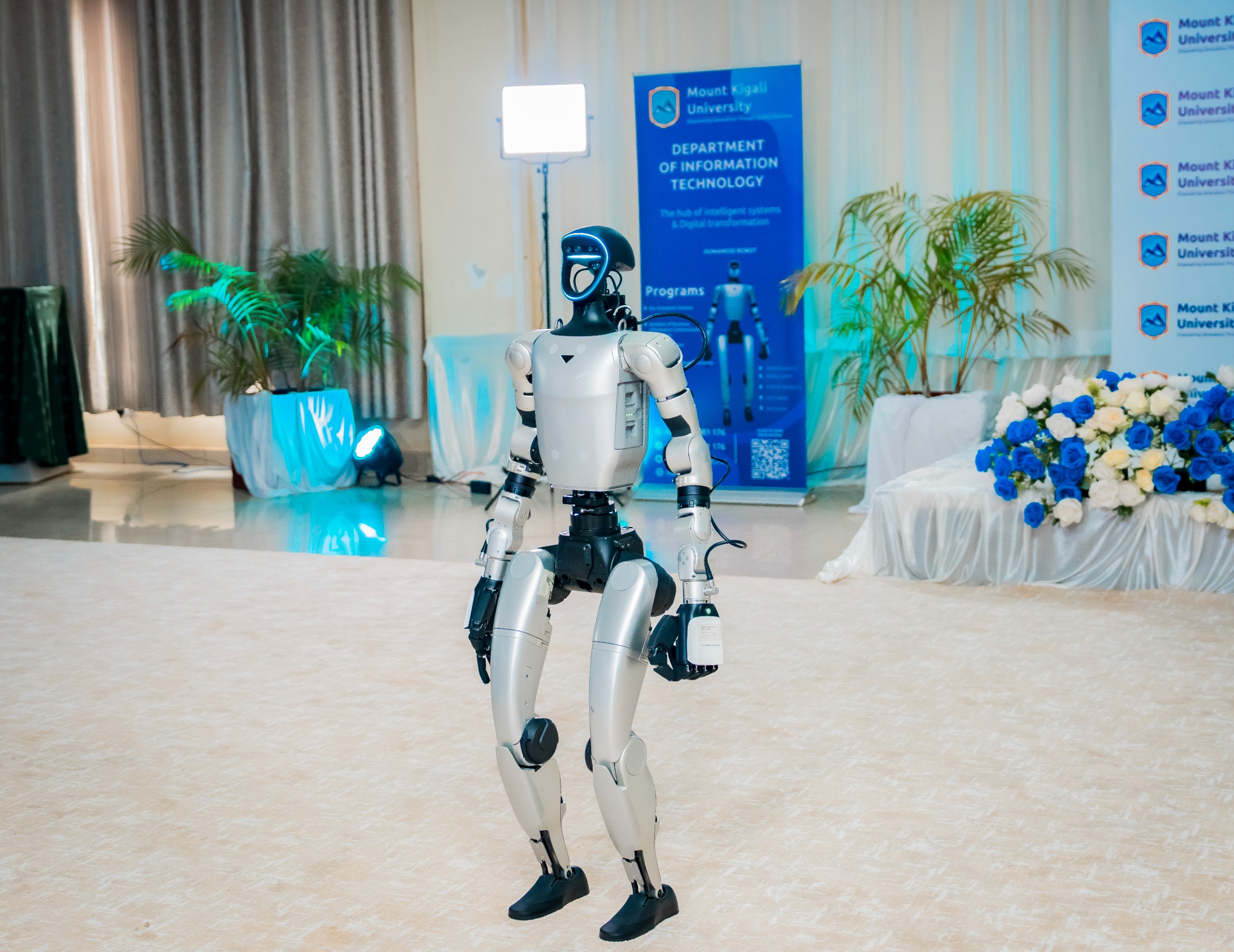
Beyond its physical frame, the platform operates as a sophisticated mobile AI laboratory. It integrates AI-driven perception that allows the machine to navigate and understand complex environments in real time. Through Extended Reality (XR) teleoperation, researchers can control the unit via immersive interfaces, while the inclusion of reinforcement learning provides a sandbox for students to develop autonomous behaviors through trial and error in both digital twins and physical reality.
Prof. Simon Gicharu, Founder of Mount Kigali University, stressed the urgency of embracing innovation in modern education and emphasized during the unveiling that the humanoid is not intended to be a promotional centerpiece, but rather a functional academic tool that will be embedded into daily operations. .
“Institutions that embrace innovation today are the ones that will remain relevant in the future,” Prof. Gicharu stated. “For us to survive, we must embrace technology and efficiency, and today’s launch demonstrates the direction we have chosen to embrace the future of technological transformation.”
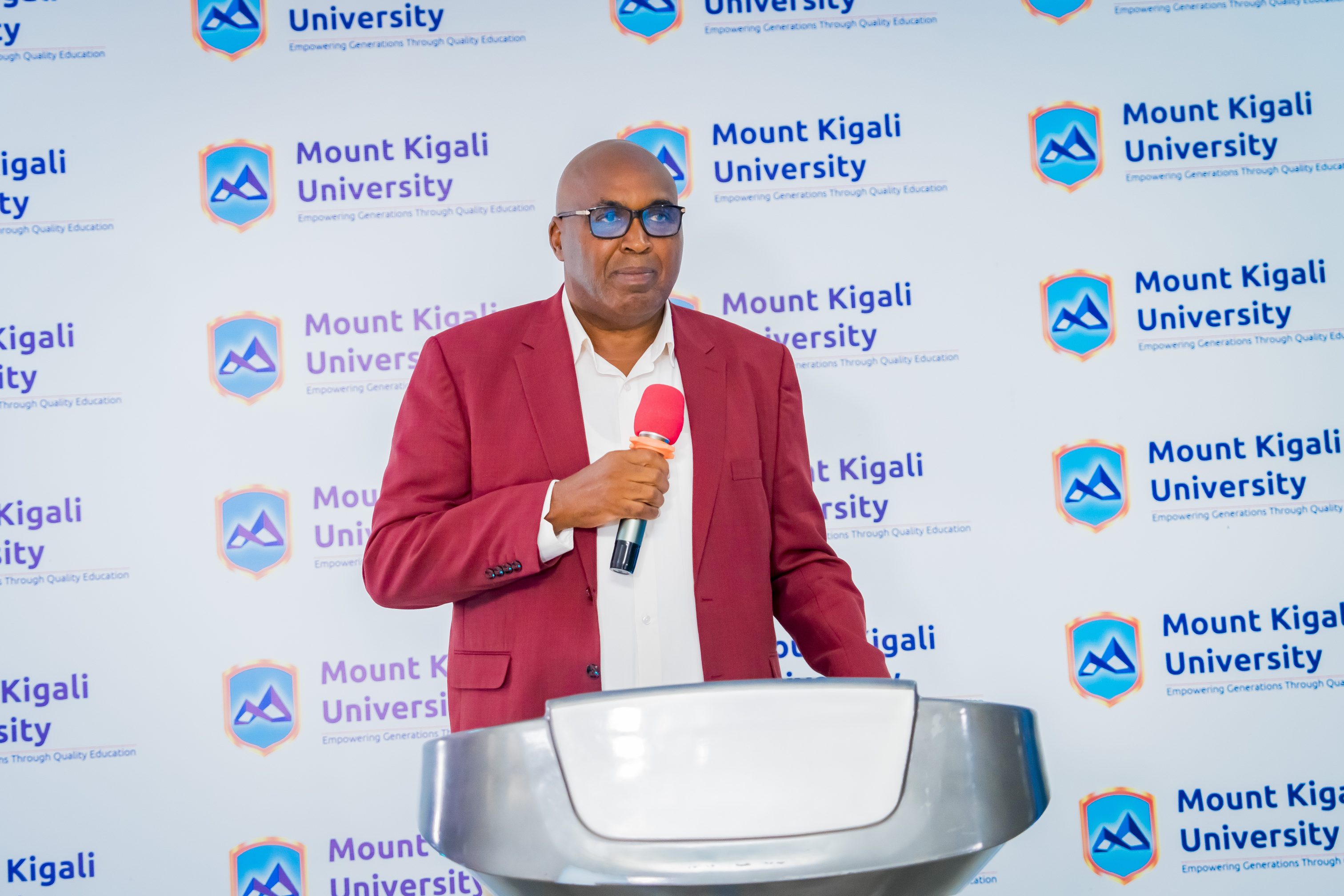
He further clarified the university’s vision for student engagement, adding, “We want learners to interact with it, test it, and use it to create innovations that respond to real-world challenges. In developed countries, institutions have already embraced this kind of technology, and we want to be on that level. Times have changed, and every Mount Kigali University student can benefit from this tool, regardless of their course, if they are bold enough to innovate. We do not want this to be something to show off. It must become part and parcel of our teaching and learning. Our university does not only teach existing knowledge, it creates solutions for the future.”
Vice Chancellor Dr. Martin Kimemia described the launch as a decisive move from strategy to action. “We are moving from strategy to action. This is not symbolic it is a functional academic tool integrated into teaching, learning, and research,” Dr. Kimemia said. “We are embracing learning by doing, shifting from theory to practical engagement. Students will program and experiment on a real machine, bridging the gap between classroom learning and the real world. Our goal is to develop innovatorsnot just job seekers, but creators of opportunities.”
While the robot will be primarily housed within the School of Business, Information Technology, and Education, its application is intended to be strictly multidisciplinary. Dr. Douglas Nyabuga, Dean of the School, highlighted the practical implications for the digital economy.
“This platform strengthens our teaching by connecting business, technology, and education in a practical way,” Dr. Nyabuga noted. “Students will not only learn concepts but apply them to solve real-world problems in today’s digital economy. It prepares graduates to be adaptable, innovative, and ready for modern industries.”
The introduction of the Unitree G1 EDU U6 is part of a broader trend of African academic institutions investing heavily in high-level hardware to remain competitive on the global stage. By providing students with access to the same equipment used in leading international research labs, Mount Kigali University is positioning its graduates to be creators of opportunity in an increasingly automated global job market.