

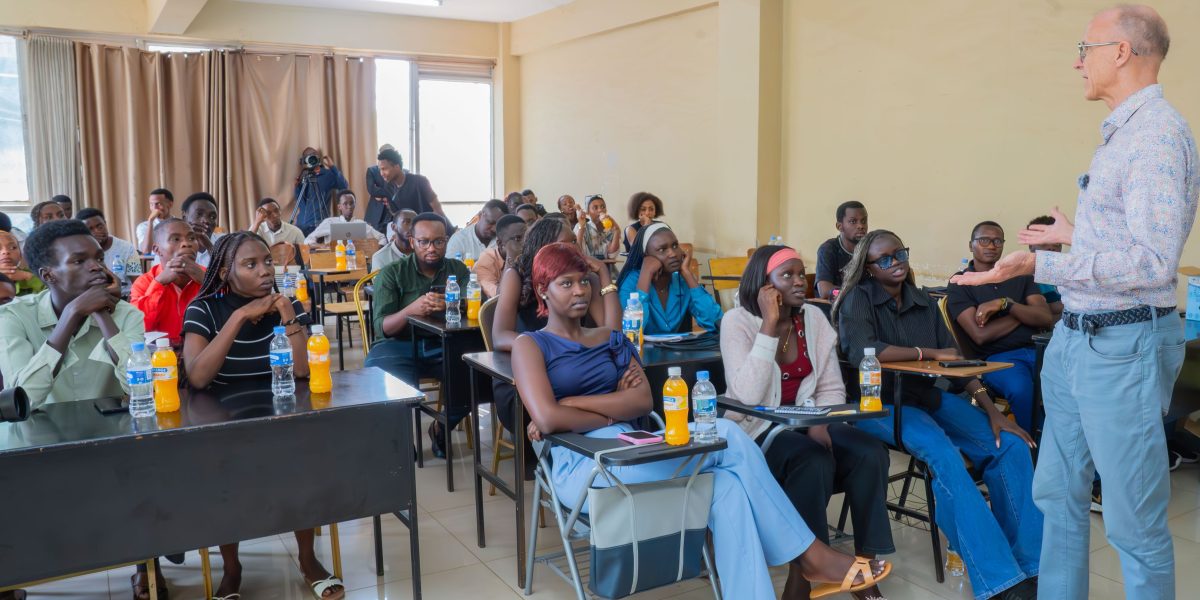
Journalism students at Mount Kigali University (MKUR) were challenged to think critically about the information they consume, produce and share during a guest lecture on digital media literacy held on 28 September 2026. The session, titled “Digital Media Literacy – Preparing the Next Generation of Journalists for Today’s Information Environment,” brought together journalism students, media practitioners and members of the academic community for an engaging discussion on the opportunities, responsibilities and risks emerging from today’s rapidly changing digital information environment. The guest lecture formed part of an initiative by the Legal Aid Forum (LAF), in partnership with the European Union Delegation in Rwanda, aimed at strengthening journalism students’ understanding of Foreign Information Manipulation and Interference (FIMI), freedom of expression and information integrity. The initiative builds on a March 2026 roundtable involving media practitioners and journalism lecturers, with the goal of connecting classroom learning with the realities of modern journalism.
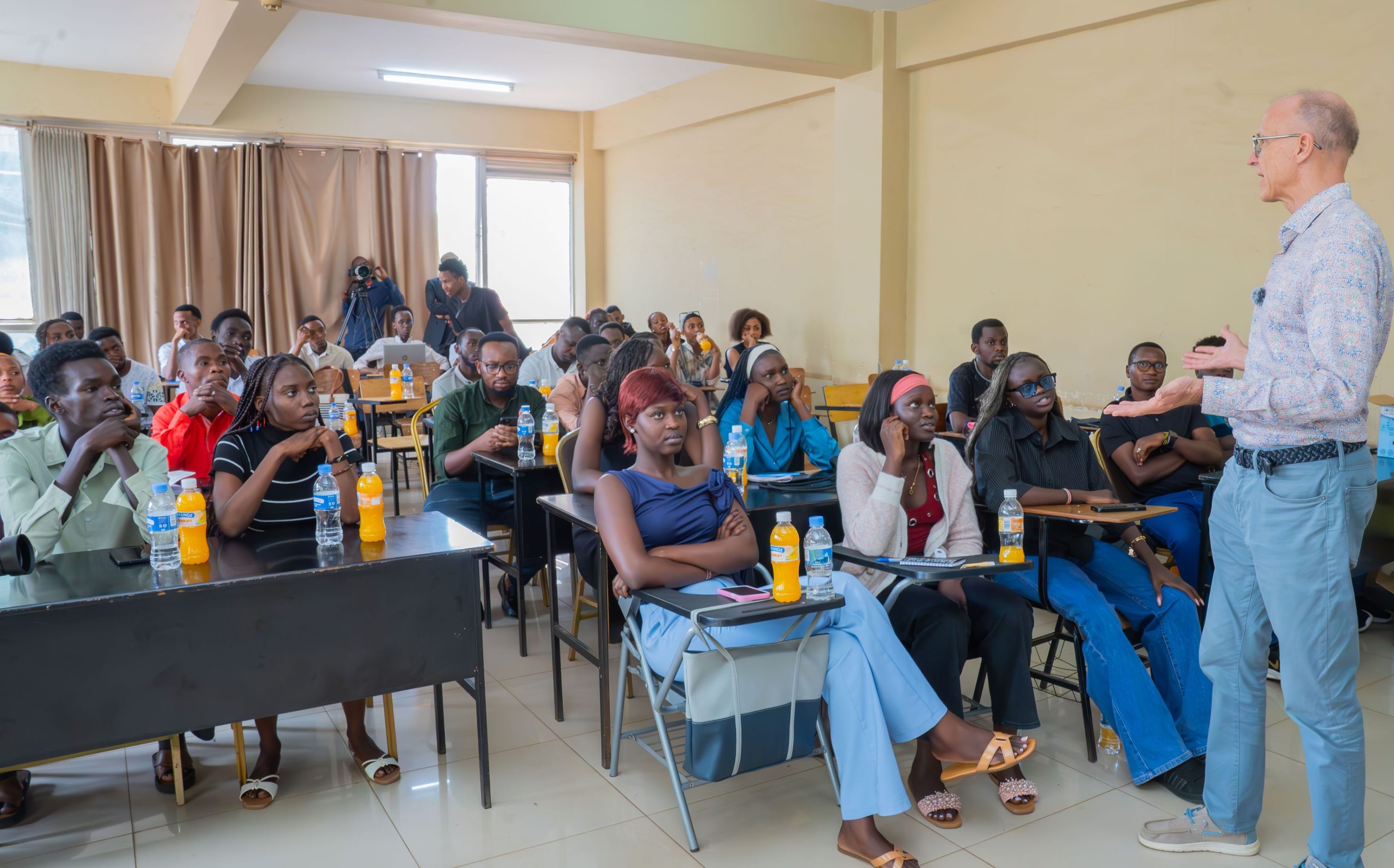
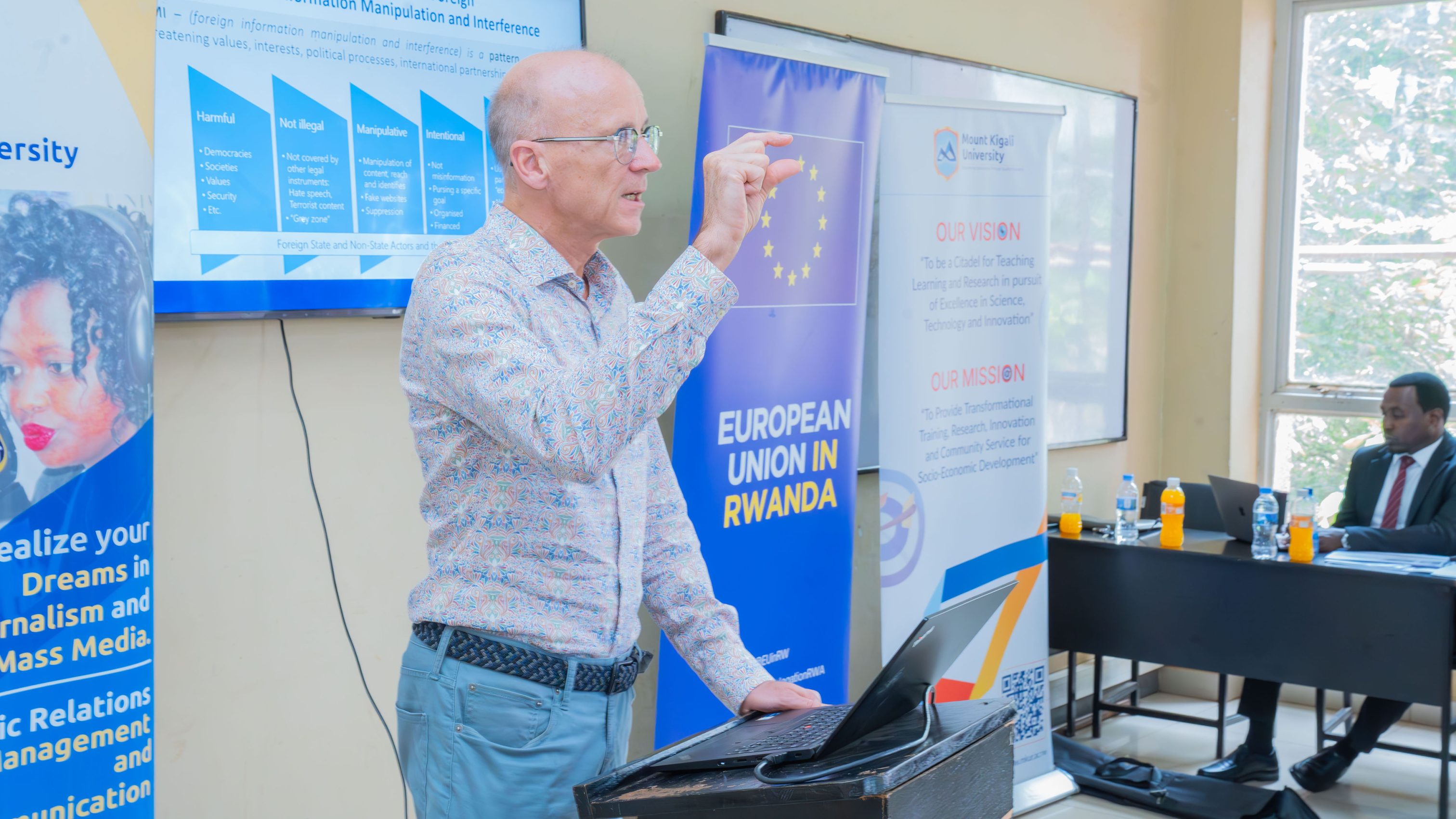
The session featured Dr. Uwe Wissenbach, Deputy Head of the European Union Delegation to Rwanda; Mr. Jean Paul Ibambe, a speaker on freedom of expression in the digital age; and Ms. Nadine Umuhoza, a news anchor at Rwanda Broadcasting Agency (RBA). Dr. Wissenbach opened the discussion by examining Foreign Information Manipulation and Interference (FIMI) and the growing challenge of misinformation and disinformation in the digital space. He explained how information can become particularly harmful when it is deliberately manipulated, intentionally disseminated and coordinated to influence individuals or public discussions. Students were introduced to some of the common tactics used in information manipulation and the importance of recognising such tactics in their work as future journalists. The discussion emphasised that responding to information manipulation requires more than simply identifying false information. Public awareness, civil society engagement, fact-checking and media and information literacy all play an important role in strengthening society’s resilience to misleading and manipulated content.
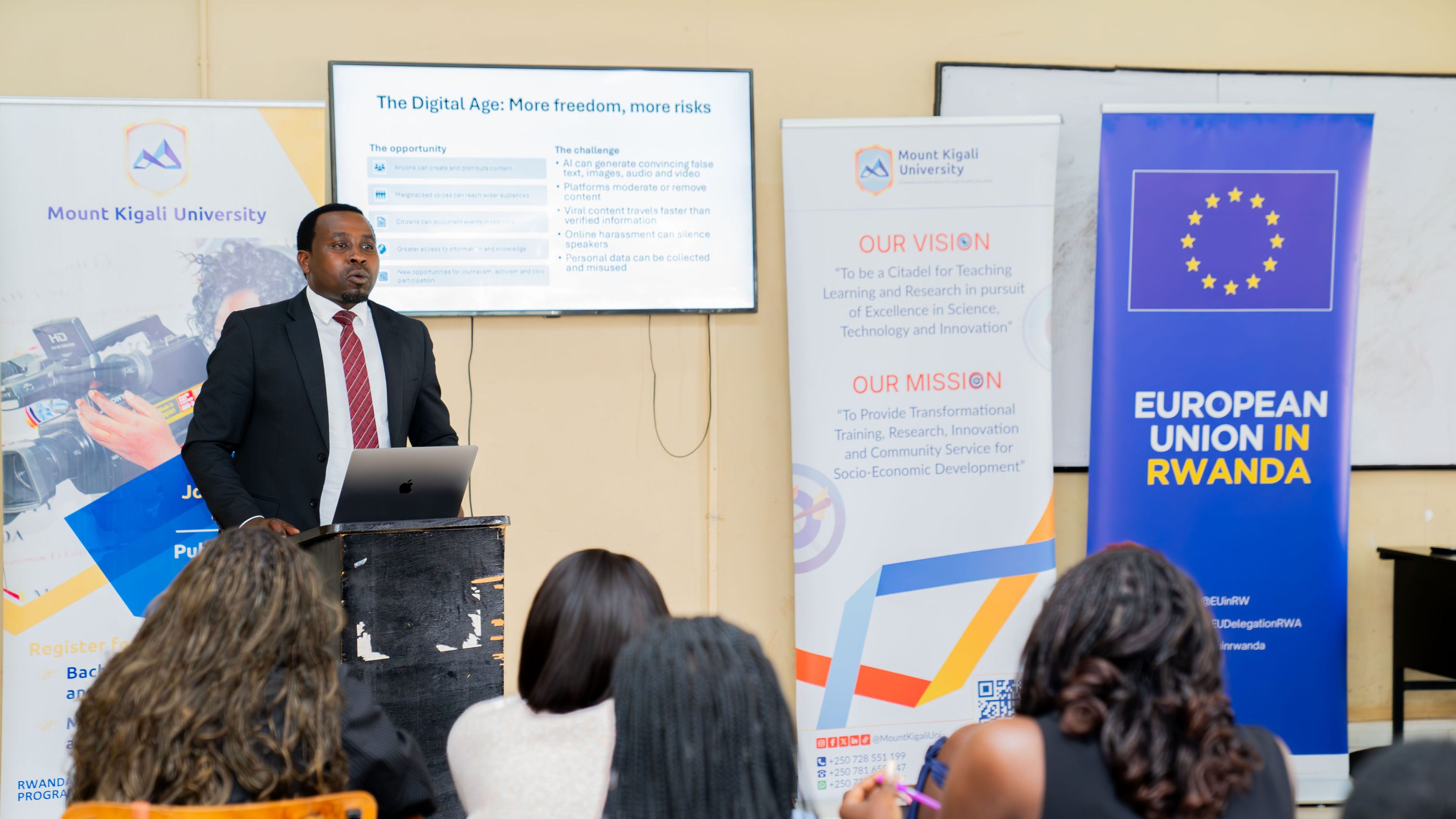
Mr. Jean Paul Ibambe focused on freedom of expression, one of the fundamental principles underpinning journalism and public discourse. He discussed the right to hold opinions, seek and receive information, and participate in public debate, while highlighting the opportunities and risks created by digital technologies. As he described it, the digital age is characterised by “more freedom, more risk,” with technology expanding opportunities for expression while simultaneously creating new challenges for journalists and content creators. His presentation also touched on Rwanda’s cybercrime law, the relationship between false information and freedom of expression under Article 39, and the decriminalisation of defamation and its implications for journalism and freedom of expression. Privacy was another key area of discussion. Mr. Ibambe encouraged students to think carefully before publishing information about other people and to ask not only whether they have access to the information, but also whether it is accurate, whether the individual concerned has given consent, and what potential harm publication could cause. He left the aspiring journalists with a simple message: “Think critically, speak freely and share responsibly.”
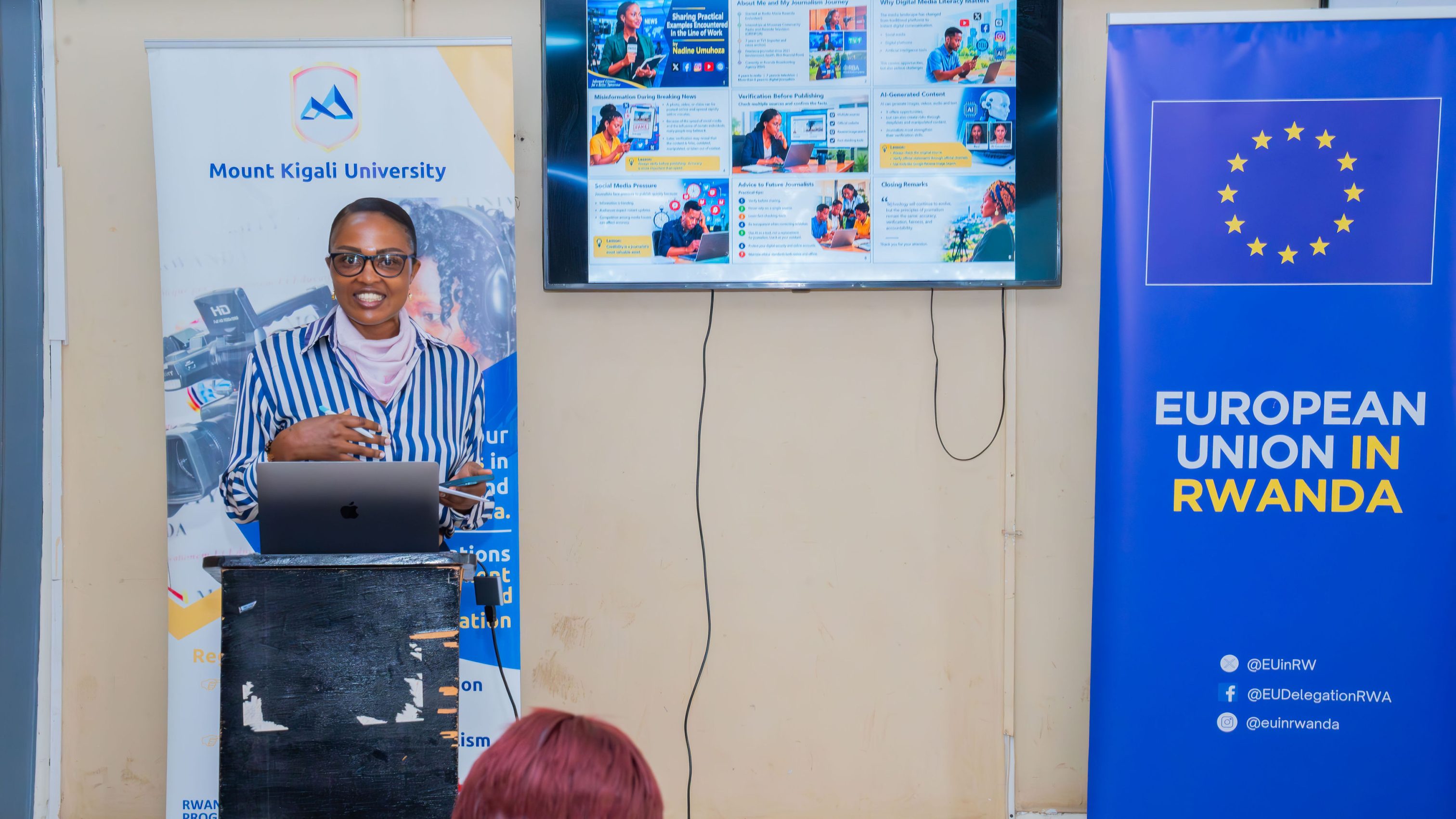
Bringing the discussion into the newsroom, Ms. Nadine Umuhoza shared practical insights from her experience as a news anchor. She emphasised that fact-checking is essential for journalists, particularly when reporting breaking news. In an environment where information can reach thousands of people within seconds, journalists may face pressure to publish quickly. However, she stressed that speed should never come at the expense of accuracy. She also addressed the challenges of social media pressure and misinformation during breaking news, reminding students of their responsibility to verify information before it reaches the public. For MKUR students, the lecture provided an opportunity to connect theoretical knowledge with the realities they are likely to encounter in modern newsrooms.
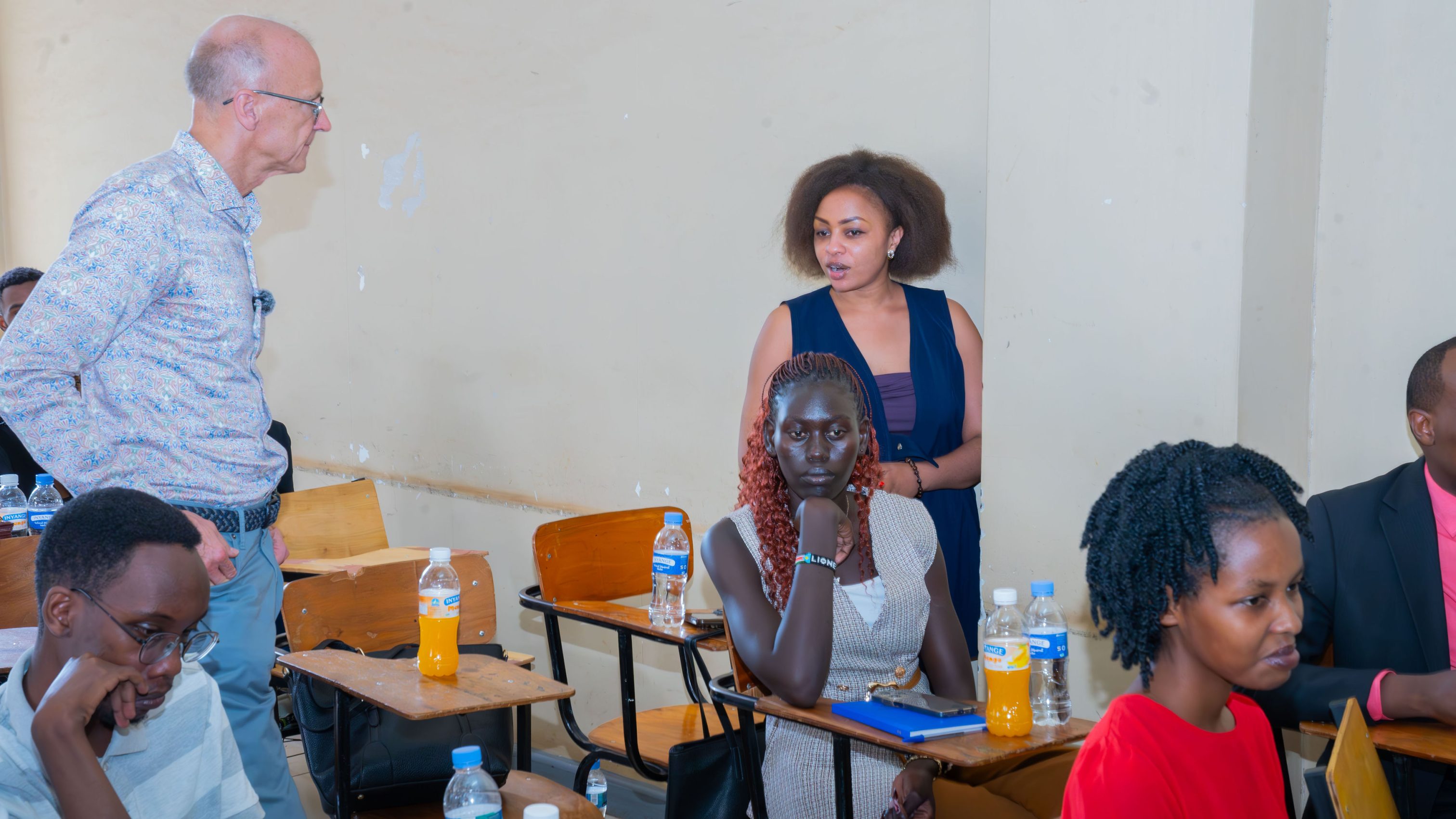
The session reinforced that journalism today involves much more than gathering and publishing information. Future journalists must be able to question what they encounter, verify facts, understand the legal framework governing their work, protect individual rights and recognise attempts to manipulate public opinion. One of the students, Usra Abdalwaheb, said the session gave her a deeper appreciation of the legal responsibilities associated with journalism. “The lecture was so interesting. I didn’t actually know that there are lots of laws that guide journalists.” Another student, Belle Amie, highlighted verification as one of her key takeaways. She noted that journalists must clarify and verify information before sharing it with the public to avoid publishing false information.
The guest lecture comes at a time when Rwanda’s media landscape, like the wider global information environment, is being transformed by digital platforms, changing audience behaviour and the growth of online content creation. The concept note for the initiative identifies challenges including pressure to publish quickly, reliance on online sources, limited verification resources and the increasing difficulty of distinguishing authentic content from fabricated or AI-generated material. By exposing journalism students to practitioners and experts working in this environment, the initiative seeks to strengthen their ability to respond to emerging information challenges with professionalism and ethical awareness. As MKUR journalism students prepare to enter an increasingly digital newsroom, the session left them with an important reminder: journalism is not simply about being the first to publish. It is about being accurate, responsible and conscious of the impact information can have on society.