
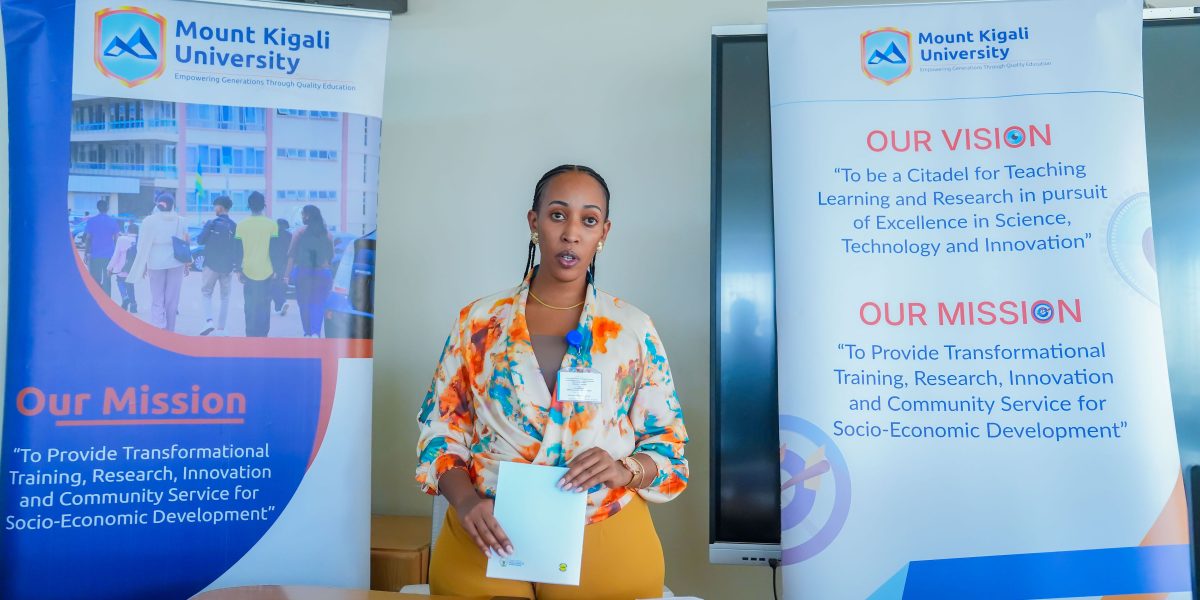
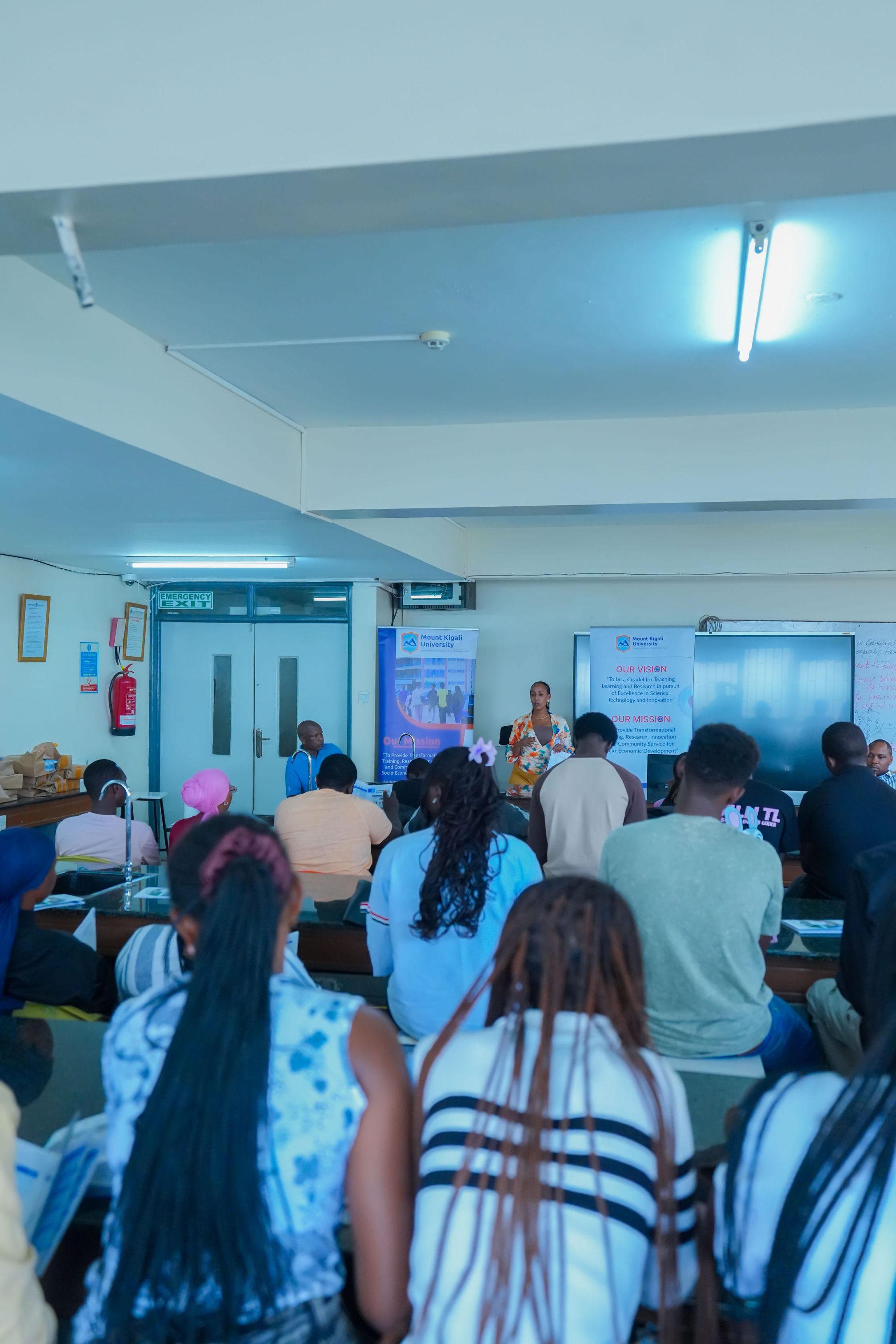
Students at Mount Kigali University (MKU), particularly those in the Finance Department, have gained practical insights into Rwanda’s national budgeting process following a budget literacy session conducted on campus by the Ministry of Finance and Economic Planning (MINECOFIN). Recently, MKU Students Gain Practical Insight into Rwanda’s National Budget through such interactive initiatives. The session, facilitated by Esther Mutesi from MINECOFIN’s National Budget Department, focused on Rwanda’s National Budget for the 2026/2027 fiscal year. It formed part of a citizen budget literacy initiative designed to help Rwandans understand how public resources, including taxes paid by citizens, are mobilised, allocated and utilised to advance national development. For MKU students, the engagement provided a valuable opportunity to connect academic concepts with real-world financial decision-making, offering a deeper understanding of how national priorities translate into government expenditure and public services. During the session, Mutesi guided students through the structure of Rwanda’s national budget, explaining how government resources are distributed across ministries and the 16 sectors that contribute to the country’s development priorities.
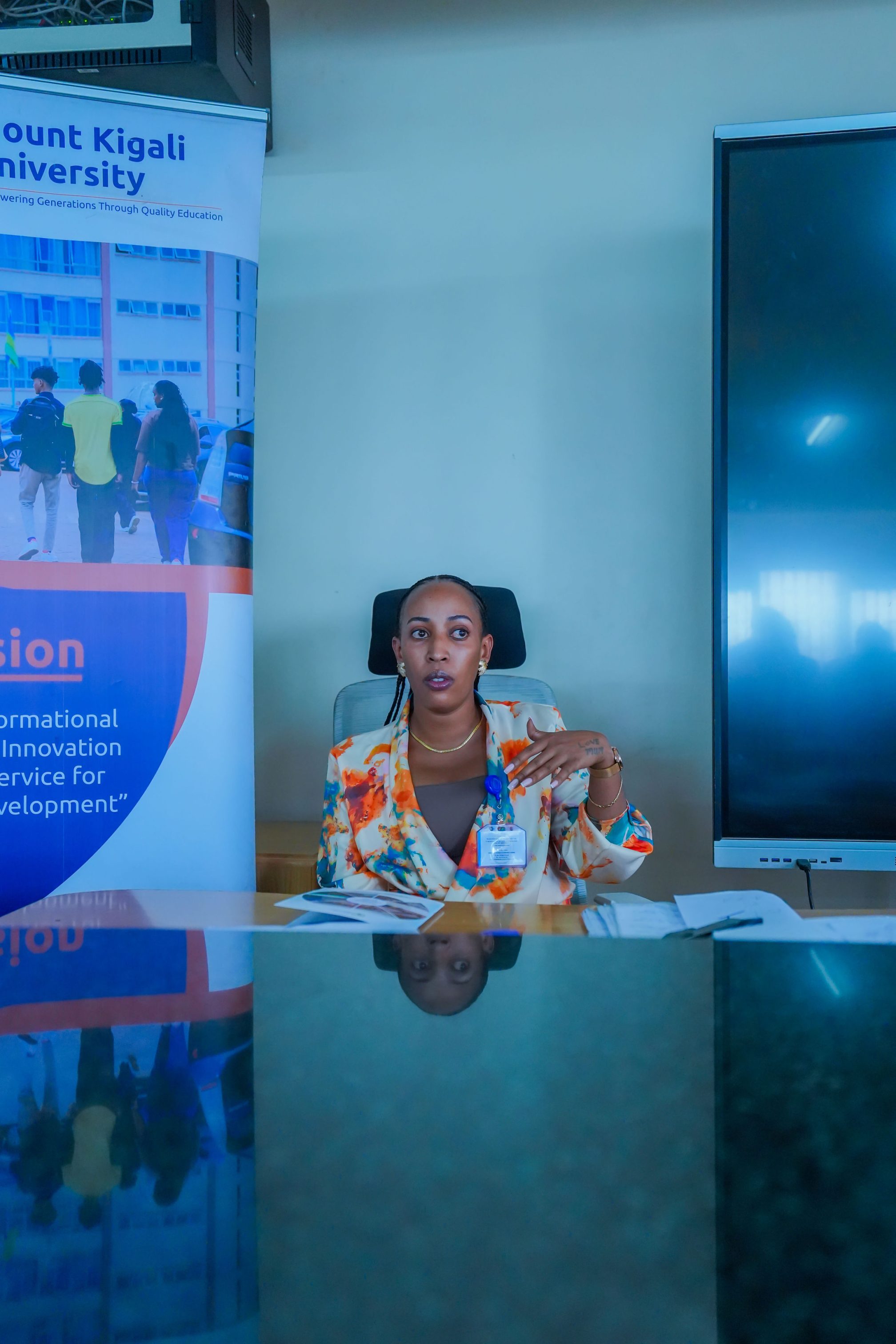
Particular attention was given to the relationship between taxation, government revenue and the delivery of public services. Students explored how taxes collected from individuals and businesses contribute to financing programmes that support economic growth, social welfare and improved service delivery. The discussion highlighted the importance of understanding the national budget not merely as a financial statement, but as a reflection of a country’s priorities and development ambitions. Rwanda’s National Budget for the 2026/2027 fiscal year amounts to Frw 7,796.3 billion, including Frw 4,429.1 billion in tax revenue. The budget supports key national priorities, including education, healthcare, agriculture, infrastructure development, job creation, social protection and economic transformation. For students pursuing finance and related disciplines, understanding how these resources are raised, prioritised and spent provides important context for studying public finance, fiscal management and economic policy. It also offers insight into the role of financial planning in balancing competing national needs while supporting sustainable development.
The engagement featured an interactive question-and-answer session that encouraged students to participate actively in discussions on government expenditure, revenue mobilisation and the allocation of public resources. Students raised questions about the national budget and how government spending decisions are made, while Mutesi posed questions to assess their understanding of the concepts presented. The exchange created an opportunity for students to clarify key issues, test their knowledge and engage directly with a government institution responsible for national financial planning. Beyond the technical aspects of budgeting, the session emphasised the importance of informed citizenship. By understanding how public resources are managed, citizens are better positioned to engage in discussions about national priorities and appreciate the relationship between revenue collection, government expenditure and the services delivered to communities. For MKU students, this interaction demonstrated how financial decisions made at the national level influence everyday life, business activity and the broader economic environment in which professionals operate.
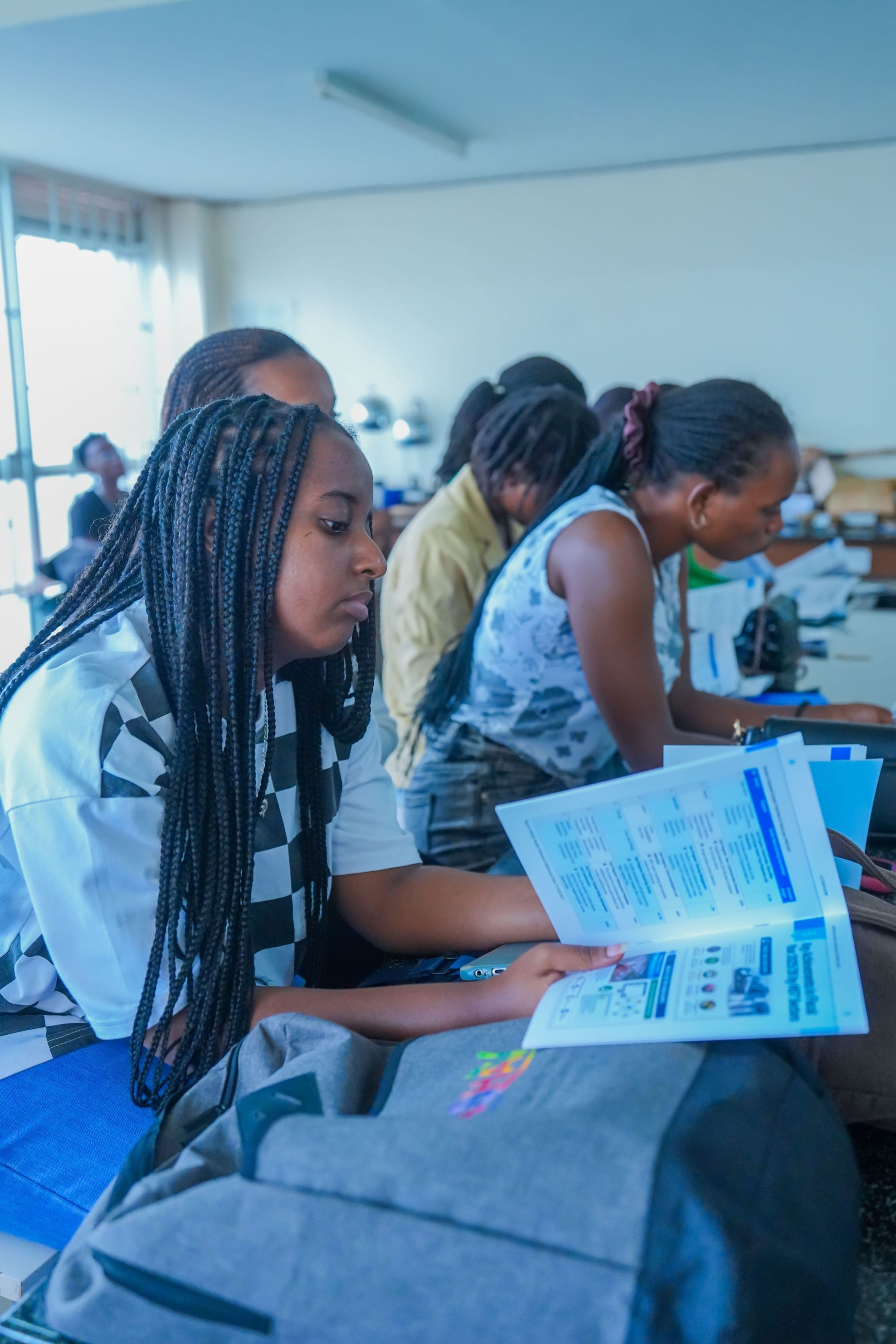
As part of the engagement, students in the Finance Department received copies of the Citizen Budget Guide, a simplified resource designed to make information about Rwanda’s national budget more accessible to the public. The guide outlines key aspects of government revenue, expenditure, national development priorities and the budgeting process. It also encourages citizens to take an active interest in how public resources are planned and utilised. The resource provides students with an additional reference for exploring the issues discussed during the session and strengthening their understanding of public financial management beyond the classroom.
Access to simplified budget information is particularly valuable in helping students interpret financial information, understand government policy and appreciate the accountability that accompanies the management of public resources. The session reinforced the importance of linking academic learning with practical exposure to the institutions, systems and policies shaping Rwanda’s economy. For MKU Finance students, the discussion provided valuable insights into national budgeting, taxation, revenue mobilisation and public expenditure, areas that are central to understanding the relationship between financial management and economic development. Such engagements also help students appreciate the professional responsibilities associated with managing financial resources, analysing economic decisions and contributing to sound financial practices in both public and private institutions.
By interacting with practitioners from government institutions, students gain opportunities to broaden their perspectives, ask relevant questions and develop a more practical understanding of the environment in which they may eventually work. Mount Kigali University continues to emphasise learning experiences that connect academic knowledge with practical application, professional engagement and the needs of society. The budget literacy session reflects the value of collaboration between higher education institutions and government agencies in equipping students with knowledge that extends beyond their academic disciplines.
It also reinforces the importance of preparing graduates who understand not only the technical aspects of their professions but also the wider economic, institutional and social contexts in which they will contribute. Through engagements such as this, MKU seeks to broaden students’ exposure to real-world issues, strengthen their analytical perspectives and encourage informed participation in national development. As Rwanda advances its economic transformation agenda, equipping students with a practical understanding of public finance and national priorities remains an important step in preparing future professionals to contribute meaningfully to the country’s development.